




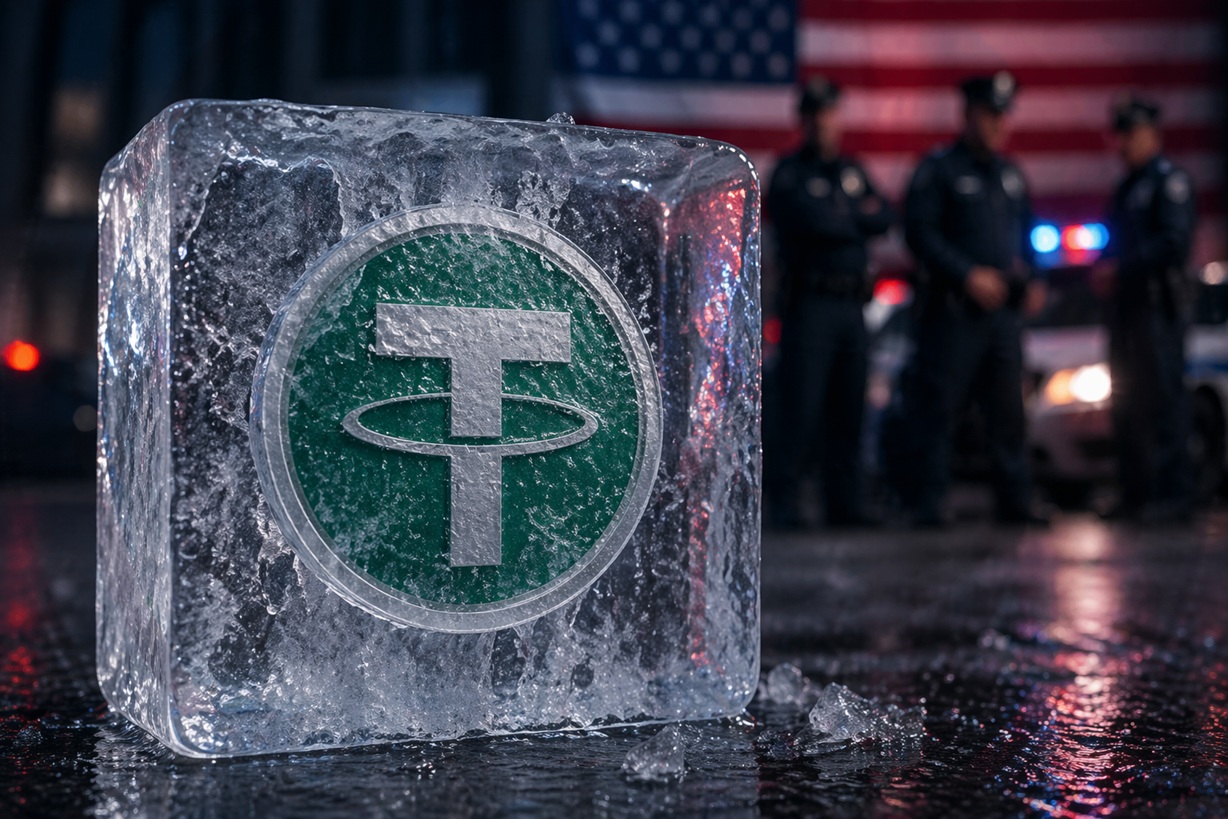
- Stablecoin giant Tether recently froze $344 million in USDT tied to illicit activity, with its CEO discouraging bad actors from using its products.
- The move elicited mixed reactions from the public, with some expressing concerns about USDT’s highly centralized governance.
Tether announced on Wednesday that it had frozen over $344 million in USDT stablecoins. It came with a warning from the company’s CEO, Paolo Ardoino, discouraging bad actors from using the stablecoin for illicit activities.
“USDT is not a safe haven for illicit activity,” said Ardoino.
Tether’s Freeze of $344 Million in USDT
Tether tied the blocked stablecoins to “unlawful conduct” orchestrated by two wallets. US authorities, particularly those from the Office of Foreign Assets Control (OFAC), linked the wallets to sanctions evasion, funding criminal networks, and other illicit activities.
Tether stated that its latest move is part of its routine to prevent the illegal use of its products. It also aligns with its commitment to cooperate with lawful requests from regulators and enforcement authorities in the US and abroad.
The company highlighted that it is working with over 340 law enforcement agencies across 65 countries. It coordinates directly with them during the investigation of active cases, rather than reacting once the funds have already entered broader circulation. Tether’s use of public blockchains for its products notably makes tracking fund movements significantly easier due to their transparency and immutability.
Tether revealed that it has aided in over 2,300 cases worldwide. More than half, or 1,200, of them were connected to law enforcement. So far, it has led to the freezing of approximately $4.4 billion in assets, with nearly half, or $2.1 billion, attributable to US authorities’ enforcement efforts.
Community Concerns Over Tether’s Absolute Control
Many praised Tether for its principled approach in running its business. They see its commitment to compliance as a sign of its maturity and long-term viability. However, others expressed their concerns about the highly centralized governance model of its stablecoins.
Critics pointed out that Tether’s $344 million freeze in a single enforcement action on two wallets completely obliterates the censorship-resistant, privacy, and permissionless narratives of crypto and blockchain. For them, the situation demonstrates that USDT is actually a “dollar enforcement rail” but only with better distribution channels. Moreover, it means holders of the company’s stablecoins are merely possessing an IOU that the issuer can void at any time.
Furthermore, some decentralization purists argued that Tether’s capability to blacklist addresses creates a chilling effect. They worry about the risk that one government could broaden its definition of “illicit activity” to target politically sensitive transactions, thereby effectively turning USDT or USAT stablecoins into tools for financial surveillance or political control — something the public fears about Central Bank Digital Currencies (CBDCs).