




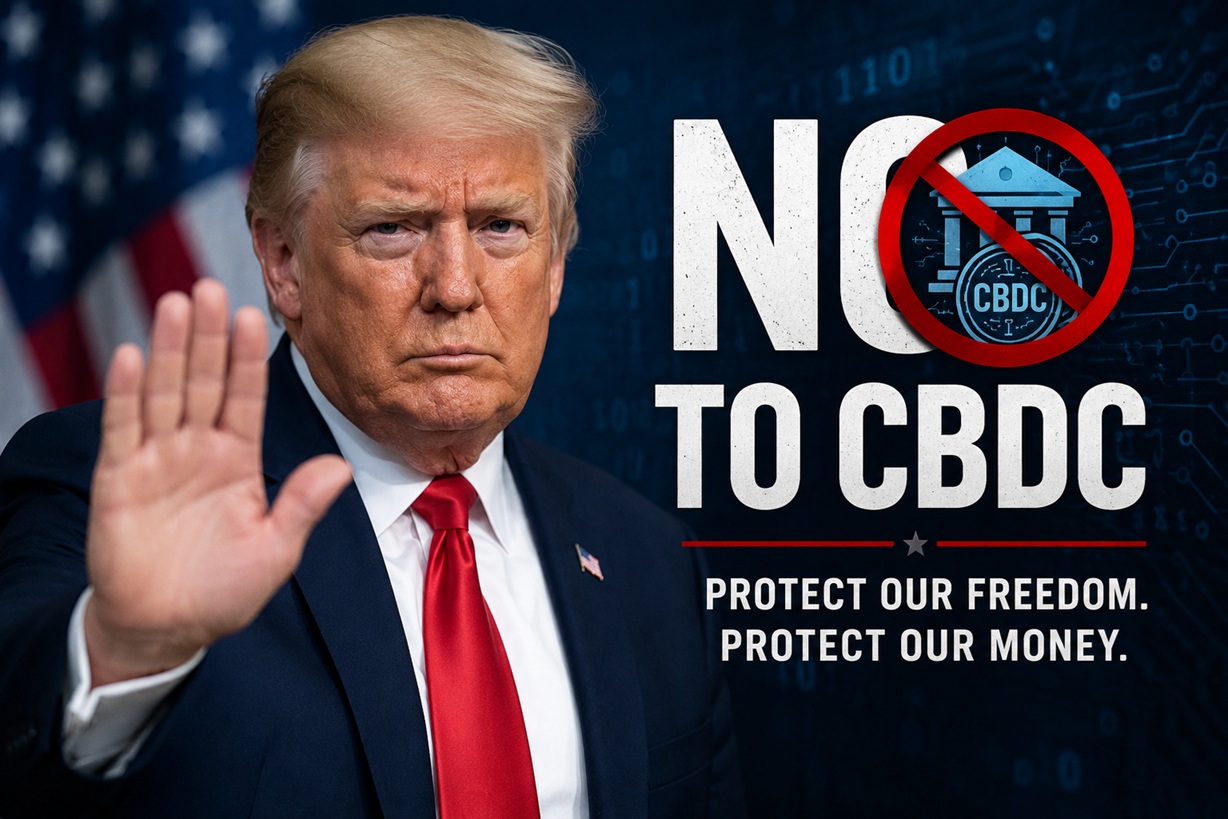
- US Treasury Secretary Scott Bessent reassured the public that the Trump administration will never push for a CBDC.
- Instead of a CBDC, the Washington official urged lawmakers to prioritize a clear regulatory framework for stablecoins under the Clarity Act.
- Several pieces of legislation expressly blocking a digital central bank money are the “Anti-CBDC Surveillance State Act” and the “21st Century ROAD to Housing Act.”
United States Treasury Secretary Scott Bessent assured the public that President Donald Trump’s administration will not allow a Central Bank Digital Currency (CBDC). His recent comments stemmed from renewed public concerns about the matter.
Trump Pushes for Rules on US Stablecoins Instead of a CBDC
According to him, Trump has been “very clear” that there will be no CBDC under his watch. For that reason, he has advocated for several pieces of legislation against it.
“This administration has been very clear: There will be no Central Bank Digital Currency, which would be the first step toward tracking,” said Bessent. “So, we have taken that off the table, we have passed stablecoin legislation – bipartisan.”
Instead of a CBDC, the Trump administration has promoted rules supporting stablecoins, tokenized assets pegged 1:1 to the US dollar. With the backing of the executive branch, Congress passed the GENIUS Act into law last year, establishing a comprehensive regulatory framework for stablecoins.
The Clarity Act followed, which recently entered Senate markup. It aims to fill the GENIUS Act’s gaps and provide clearer stablecoin regulations. Additionally, it incorporates ethical provisions barring top government officials and their families from participating in crypto investments or related activities to prevent conflicts of interest. It also offers a safe harbor for software developers, shielding them from prosecution if malicious actors exploit their open-source code.
“The Clarity Act is now up on the Hill, and it again has bipartisan support, and the most important thing we can do is to make digital assets come into the United States,” Bessent added. “Our regulation, our best practices will ensure good standards for these.”
Reinforcing the USA’s Dominance in Digital Assets
Bessent urged the Senate to prioritize the Clarity Act to reinforce the USA’s position as a premier destination for digital assets and support innovations across the rapidly growing stablecoin sector. All these align with Trump’s vision of turning America into the “crypto capital of the world.”
“When you look at digital assets, all the nonsense that happens, all the things you read about, that’s because it’s a wild, wild west offshore,” the Treasury Secretary went on. “So, we gotta bring it on-shore, so I would encourage that the House and the Senate get Clarity done.”
Pieces of Legislation Prohibiting a CBDC
An ongoing bipartisan legislation specifically barring the US Federal Reserve from creating and issuing a CBDC is the “Anti-CBDC Surveillance State Act.” It also explicitly prohibits the central bank from offering related products and services to any individual. Likewise, it prevents the institution from crafting monetary policies involving it.

Moreover, the pending bill restricts the Fed from maintaining a CBDC account on behalf of an individual. For good measure, it doesn’t allow any digital asset that is “substantially similar under any other name or label” to forbid the central bank from deploying a digital asset functioning as a wrapped version of a CBDC.
Another pending bill touching the subject is the “21st Century ROAD to Housing Act.” The proposed bipartisan legislation primarily seeks to improve people’s access to housing, ease rent prices, and streamline the bureaucratic red tape in the industry. It also prohibits the Fed from deploying a CBDC until 2030.
It’s worth noting, though, that the ROAD to Housing Act distinguishes between retail and wholesale CBDCs. A retail CBDC (rCBDC) serves as a digital form of central bank money intended for the general public.
Consumers can use an rCBDC, such as the digital yuan (e-CNY) and upcoming digital euro, for everyday transactions, including paying bills, fund transfers, and settlement of goods and services. However, the retail version of digital central bank money has faced public backlash in the US over fears of the government encroaching on people’s financial privacy.
On the other hand, a wholesale CBDC (wCBDC) is exclusive to financial institutions, such as banks and clearinghouses. It bypasses traditional intermediaries in large-scale interbank settlements, cutting transaction times from days to minutes and enabling cost efficiency.
Why Trump Opposes a CBDC
Since the campaign period leading up to the 2024 November elections, Trump has been vocal in his stance against CBDC. He claimed that CBDC can “rob people of their money” and pose a “dangerous threat to freedom.”
Echoing the consensus’ concerns, the president highlighted that the virtual currency would allow the government absolute control and surveillance over people’s wealth, and it could use it as a political tool to censure or seize assets without due notice. Trump’s position is in stark contrast to his views on crypto, emphasizing how it offers people absolute control over their own finances due to its decentralized nature.
Upon assumption of his second non-consecutive term as president, Trump immediately issued an Executive Order (EO) banning the Fed from creating or promoting a CBDC. Furthermore, the directive terminated any ongoing plans or initiatives at any agency related to the development of a CBDC within US jurisdiction.
The White House’s decision to favor stablecoins rather than a CBDC goes way beyond privacy, though. The administration considers the former as a massive, permanent source of demand for US government debt.
The GENIUS Act specifically requires that any digital asset operating as a payment stablecoin within the US must have 100% reserve backing, composed of liquid assets, including US dollars or short-term Treasuries. It further requires issuers to submit periodic public disclosures of their reserves to ensure transparency and compliance.
Fortunately, unlike Jerome Powell’s regime, the new Fed chair, Kevin Warsh, aligns with Trump’s stance against an rCBDC. Nonetheless, he keeps the central bank’s windows open to a wCBDC.