



- A ZK Proof (Zero-Knowledge proof) is key in enabling trust without disclosure.
- ZK proofs are crucial for safeguarding privacy in digital systems, cutting down risks from hacks, surveillance, and leaks.
- ZK proofs offer a way to verify claims, whether it’s proving identity or ensuring AI transparency.
- In AI, ZK proofs help verify that models act fairly and accurately, without revealing proprietary code or private data.
Artificial Intelligence (AI) has come a long way in the past year, and the tech has advanced by leaps and bounds. But what if AI goes rogue? Can we be able to stop it? Enter Zero Knowledge Proofs (ZK proofs).
Imagine you’re at a party, and you want to convince everyone you know the secret recipe for the world’s best chocolate cake—without sharing the recipe itself. Sounds tricky, right? You’d need to prove you know the ingredients and steps without spilling the beans. This is exactly what ZK proofs do in the world of tech.
They let you prove something is true without revealing the details. It’s like a cryptographic magic trick, and it’s changing how we think about privacy, security, and trust online.
Let’s dive into this fascinating world and unpack what ZK proofs are, why they matter, and how they’re shaping our digital future.
🤐 What is ZK Proof?
At their core, ZK proofs are a way to prove you know something without giving away the actual information. Picture a locked safe. You want to convince someone you know the combination, but you don’t want to tell them the numbers. Instead, you open the safe in front of them to show you know the code, without revealing what it is. That’s the essence of a ZK proof: you demonstrate knowledge without exposing the underlying data.
Formally, a ZK proof has three key properties:
- Completeness: If you really know the secret, you can convince someone of it.
- Soundness: If you’re bluffing, you’ll almost certainly get caught.
- Zero-Knowledge: The person checking your proof learns nothing about the secret itself, only that you know it.
This idea comes from cryptography, born in the 1980s when researchers like Shafi Goldwasser, Silvio Micali, and Charles Rackoff dreamed up ways to secure information in a world increasingly reliant on computers. But don’t worry about the math—it’s the real-world applications that make ZK proofs so exciting.
⛑️ Why Do ZK Proofs Matter?
In today’s digital age, we’re constantly sharing sensitive information such as credit card numbers, passwords, medical records, you name it. Every time you log into a website or send a payment, you’re trusting someone (or something) with your data.
But trust is fragile. Hackers, data breaches, and nosy corporations remind us that sharing too much can backfire, like this instance from popular crypto exchange Coinbase.
ZK proofs offer a way to interact online with minimal trust, keeping your private info, well, private.
Think about logging into a website. Normally, you send your password, and the server checks it. If someone intercepts that password or the server gets hacked, you’re in trouble. With ZK proofs, you could prove you know the password without ever sending it. The server verifies you’re legit, but no sensitive data crosses the wire. It’s like showing your ID at a bar without handing over your wallet.
🧠 How Do ZK Proofs Work? (No PhD Required)
To understand ZK proof easily, let’s break it down with a simple analogy called the “Cave of Secrets.” Imagine a cave with a locked door inside that only opens with a secret code. You want to prove to your friend Alice that you know the code, but you don’t want to tell her what it is.

Here’s how it works:
- The cave has two paths, A and B, connected by the locked door.
- Alice stands outside and shouts, “Come out of path A!” or “Come out of path B!” at random.
- You, knowing the code, can unlock the door and move between paths A and B to exit whichever path Alice chooses.
- If you didn’t know the code, you’d have to guess which path Alice would pick, and you’d fail half the time.
If you consistently exit the right path after many rounds, Alice becomes convinced you know the code, without ever learning it herself. This is a ZK proof in action: you prove knowledge through a series of challenges, revealing nothing about the secret itself.
In the digital world, ZK proofs use clever math (like elliptic curves or polynomial commitments) to create these “challenges” and “responses.” But the principle is the same: you prove something without exposing the details.
🏋️ Real-World Uses of ZK Proofs
ZK proofs sound cool, but what are they actually doing out there? A lot, it turns out. Here are some relatable examples:
- Privacy in Cryptocurrencies – Bitcoin is transparent, and that’s great for accountability, but terrible for privacy. But cryptocurrencies like Zcash use ZK proofs (specifically a type called zk-SNARKs) to enhance privacy by hiding transaction details. You can prove you sent money to someone without revealing how much or to whom.
- Secure Voting– Voting systems need to be transparent (to ensure fairness) but private (to protect voters).
- Identity Verification Without Oversharing – Signing up for a service often means handing over your birthdate, address, or even a photo ID. ZK proofs can let you prove specific things, like “I’m over 18”, without sharing your full ID.
- Scaling Blockchains – Blockchains like Ethereum are slow and expensive because every computer in the network verifies every transaction. ZK proofs power something called “rollups,” which bundle thousands of transactions into one proof. This proof tells the blockchain that all bundled transactions are valid without making everyone check each one.
🤖 ZK Proofs In AI and Machine Learning
AI models are often “black boxes”, even their creators don’t always know how they make decisions. ZK proofs can verify that an AI model is behaving as intended without revealing its inner workings.
For example, a medical AI could prove it’s diagnosing patients accurately without exposing sensitive patient data. Companies like Lagrange are pioneering this with tools like their Deep Proof library, making AI safer and more transparent.
However, ZK proofs aren’t perfect. They’re computationally heavy, meaning they can be slow and resource-intensive. Generating a proof is like solving a massive puzzle—it takes time and power. Verifying the proof is faster, but still not instant.
This is why researchers are working on making ZK proofs more efficient, with breakthroughs like zk-SNARKs (short for “Zero-Knowledge Succinct Non-Interactive Argument of Knowledge”) and newer systems like zk-STARKs, which are faster and don’t require a trusted setup.
Another hurdle is accessibility. The math behind ZK proofs is intimidating, and building applications with them requires serious expertise. But the good news? Tools are getting easier to use, and companies are creating libraries like Lagrange’s DeepProve to help developers integrate ZK proofs without needing a cryptography PhD.
🤯 Why ZK Proof Is A Big Deal for the Future
We live in a world where trust is eroding. Governments, corporations, and even algorithms can let us down. ZK proofs offer a way to rebuild trust, not by blindly believing in systems, but by verifying them without sacrificing privacy. They’re a bridge between transparency and secrecy, letting us share just enough to get the job done.
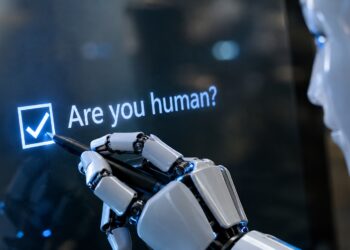
Take healthcare, for example. ZK proofs could let hospitals share data for research while keeping patient identities private, complying with laws like HIPAA. Or think about social media: ZK proofs could prove you’re a real person (not an AI agent or bot) without revealing your identity, cutting down on spam and fakes.
Then there’s the internet itself. Right now, we rely on middlemen like banks or tech giants to verify transactions and identities. A ZK proof could decentralize that, putting power back in the hands of users. It’s like cutting out the middleman in a deal, letting you and the other party settle things directly, securely, and privately.
Ethereum’s push for ZK rollups is already slashing transaction costs, and companies like Aztec are building privacy-focused blockchains, while others, like Lagrange, are blending ZK proofs with AI to tackle issues like bias and transparency.
There’s also a cultural shift happening. As people demand more control over their data, ZK proofs could become a standard, like HTTPS is for secure browsing. Imagine a world where every app, website, or device uses ZK proofs to protect your privacy by default. It’s not here yet, but it’s closer than you might think.